

For more than twenty years, the search process involved looking for pieces of information over a browser. A user had to think of the required data in terms of a database. One had to come up with a query like "best running shoes flat feet 2024" in a search engine prompt. After pressing Enter, loads of ads appeared often distracting users with lengthy articles, comparisons, and summaries.
In 2026, the search arena gets clearer and easier with artificial intelligence coming into the picture. Now users interact with AI chatbots using real-time conversations instead of keywords. Users talk to an intelligent system that reads, summarizes, and answers questions on their behalf.
The ChatGPT phenomenon has taken over the internet by storm, changing people’s behavior and taking over the market share from traditional search engines. By answering questions with references, ChatGPT threatens to upend the whole search economy. Therefore, to optimize the visibility of one’s brand, one must understand what ChatGPT and the AI-driven QA model mean for the future of research and publishing.
Key Takeaways
AI Search Optimization Summary: This technical overview summarizes key digital search changes for tracking systems, marketing teams, and content developers in 2026.
- The Core Shift: Standard query indexes are fragmenting. ChatGPT now manages roughly 17% of total global digital queries, processing over 2.5 billion daily prompts.
- Traffic Conversion Reality: While traditional search engine click rates are dropping, traffic coming from an ai tool or a dedicated search engine like ChatGPT converts at a higher rate—up to 14.2% compared to Google's 2.8%.
- Optimization Priority: To remain visible, brands must optimize for citation placements in ai overviews and large language model answers instead of chasing simple keywords.
Quick Summary: According to ChatGPT’s search trends in 2026, the demand for short-tail keywords is decreasing as users tend to input long conversation history for better context. The isolated application of ChatGPT already accounts for around 17% of search traffic on a global scale and is estimated to have over 900 million weekly active users. The informational search landscape is gradually migrating from traditional search engines to AI chatbots, which means that SEO is slowly transforming into Generative Engine Optimization.
Section 1: Introduction to ChatGPT Search Trends
Understanding how users find information requires tracking the growth of ChatGPT trends. What began as an experimental assistant has grown exponential interest. ChatGPT has on an average over 900 million weekly users and gives accurate answers to billions of queries each day.
This growth presents a major threat to Google’s dominance on digital queries. While Google remains the preferred choice for most internet searches, ChatGPT controls approximately 17% of the market. This makes it the second-largest search platform in the world and the first to challenge Google’s supremacy in two decades.
This article will demonstrate how these trends impact average users, developers, and businesses. We'll focus on clickstream data, review queries that are trending, and give you an outline of changes to make in your website for it to be more relevant and visible to searchers in 2026.
Section 2: Understanding User Behavior and Search Patterns
To understand ai search trends, we can look at how people talk to these systems. The user’s behavior drastically changes when shifting from conventional search to ChatGPT.
Key Metrics and Data Sources
Recent clickstream studies tracking over 80 million records highlight a major shift in search habits. Instead of short, two-word terms, the average ChatGPT query is now longer than five words.
Users are no longer typing simple keywords. They are writing full paragraphs, sharing raw data, or uploading images to explain their problems.
  %%{init: {'theme': 'dark', 'themeVariables': { 'fontSize': '18px', 'pieTitleTextSize': '22px' }}}%%
  pie title B2B AI Referral Market Share (2026)
      "ChatGPT" : 63
      "Claude" : 22
      "Gemini" : 15
Common Topics and Queries
According to the search analysis, the most common type of queries are informational searches. The most searched topics are code assistance, document summarization, comparison of specific subjects, and detailed instructions on particular issues.
Moreover, there is a growing trend of transactional searches. Some users use the chatbot for decision-making such as “Which cloud platform has the best support and reliability for a small business?”
Demographic Insights: Who Uses ChatGPT for Search?
Adoption is highly visible among younger, tech-literate populations. Pew Research shows that 58% of U.S. adults under 30 use ChatGPT, which is nearly double the rate of older age groups.
This is particularly true in higher education. Prospective students regularly use ChatGPT as an academic assistant to research degree programs, compare colleges, and navigate application requirements.
Temporal Patterns and Fluctuations
Search interest varies by season. Academic queries spike during the spring and fall school terms.
Meanwhile, business and technical queries drop during summer holidays and rise during the first quarter, when companies review new software tools and launch digital initiatives.
Section 3: Emerging Trends and Shifts in Search Dynamics of AI Search 2026
The year 2026 has brought a new wave of developments in the search market. The primary driver is AI search 2026, which is changing how platforms handle user requests.
The Growth Trajectory of ChatGPT Queries
ChatGPT's search queries have grown rapidly, but fragmentation began to creep in.
In 2025 ChatGPT had nearly 89% of the B2B AI referral traffic, but that figure dropped to 63% by mid-2026. Other chat forerunners like Gemini, Claude, and Perplexity increased their search share.
The Rise of Context-Aware Searches
Traditional search engines treat each search as an isolated event. If you run a search, and then run a second search, the system resets your session.
In contrast, ChatGPT maintains continuous context. Users can run a search, ask for modifications, filter the results, and refine the output over several turns. This dynamic has made AI conversation the default format for complex online research.
Comparing Google, YouTube, and Amazon Trends
Standard keyword platforms are seeing different shifts:
Google Search Trends: Classic queries for short-form, transactional lookups remain stable, but informational searches have dropped.
YouTube Search Trends: Video search is growing as users look for visual, step-by-step tutorials that text models cannot easily explain.
Amazon Trends Search: Amazon is still the starting point for simple product searches, but users are increasingly asking ChatGPT to compare products before they buy.
Section 4: Implications for Users, Developers, and Businesses
The rise of conversational tools requires major adjustments across the tech ecosystem. Developers and marketers need to change how they build and track web pages.
Enhancing User Experience Through Tailored Answers
For users, the main benefit is speed. Instead of clicking through ten blue links and rejecting cookie banners on multiple sites, they receive a single, unified answer with clear citations. This is highly valuable on mobile screens where browsing multiple tabs is slow and difficult.
Opportunities for Developers: Technical AI Referrer Tracking
Web developers initially faced the problem of tracking visitors coming from ChatGPT. A user clicking a link inside ChatGPT was recorded as direct traffic. To solve this, developers can deploy custom JavaScript tracking scripts to isolate and log AI referrers.
Here is a lightweight, production-ready tracking script you can add to your website to capture AI referral paths:
// Lightweight AI Referrer Tracker Script
(function() {
  const referrer = document.referrer;
  if (referrer) {
    const refLower = referrer.toLowerCase();
    let aiSource = null;

    // Evaluate standard AI search referrers (case-insensitive check)
    if (refLower.includes('chatgpt.com') || refLower.includes('openai.com')) {
      aiSource = 'ChatGPT';
    } else if (refLower.includes('perplexity.ai')) {
      aiSource = 'Perplexity';
    } else if (refLower.includes('claude.ai') || refLower.includes('anthropic.com')) {
      aiSource = 'Claude';
    } else if (refLower.includes('gemini.google.com') || refLower.includes('gemini.google')) {
      aiSource = 'Gemini';
    }

    if (aiSource) {
      console.log('AI Referral Identified:', aiSource);

      // Update Google Analytics 4 (GA4) with custom event using standard window.gtag payload
      if (typeof window.gtag === 'function') {
        window.gtag('event', 'ai_referral', {
          'event_category': 'engagement',
          'event_label': aiSource,
          'ai_platform': aiSource,
          'referrer_url': referrer
        });
      }
    }
  }
})();
Business Strategies: Visibility Over Clicks
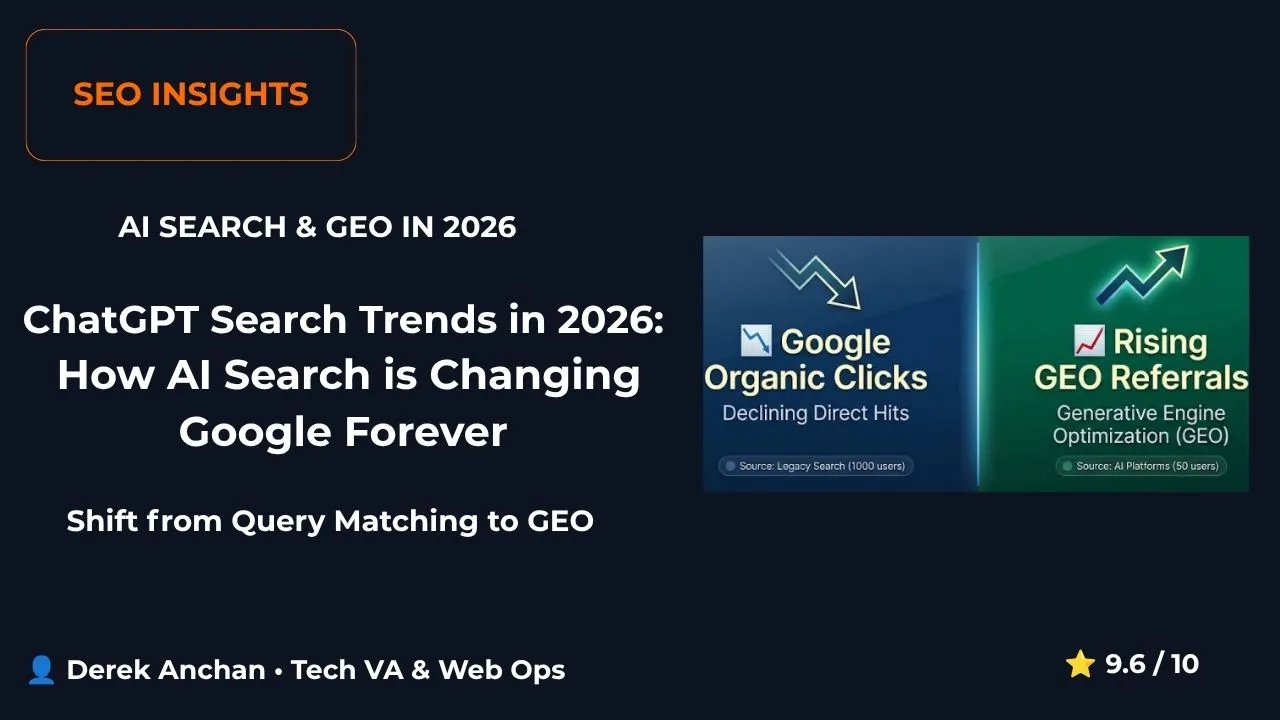
As AI summaries answer questions directly on the results page, website impressions are dropping. To adapt, businesses are shifting from traditional Search Engine Optimization (SEO) to Generative Engine Optimization (GEO).
The primary goal is no longer ranking first on Google. Instead, it is getting your brand cited as a trusted source inside AI answers.
| Traditional SEO Metric | AI Search / GEO Metric | Why the Shift Matters in 2026 |
|---|---|---|
| Keyword Volume | AI Conversation Intent | Specific phrases are replaced by conversational, multi-step dialogue flows. |
| Search Engine Click-Through (CTR) | Citation Share & Brand Mention | Users stay on the platform. The goal is to be cited as the trusted reference. |
| Bounce Rate | Referral Engagement Duration | Traffic from AI search is highly pre-qualified, converting 31% better. |
To build citation authority, you can compare platforms and understand their differences. This will help you tailor your content for different models. Check out this guide comparing ChatGPT vs Claude to see how their indexing and retrieval styles differ.
Ethical Considerations and Privacy Concerns
Using user data to train large models has raised privacy and copyright questions. Many publishers have blocked AI crawlers using their robots.txt files.
This creates a challenge: if AI models cannot read your site, your brand will not appear in conversational answers, even if you write high-quality content.
Section 5: Practical Perspectives and Future Outlook
As the search landscape shifts, companies need clear strategies to remain visible.
Next-Gen AI Search Ecosystem
Siri, Alexa & Voice Engines understanding natural conversational context.
Real-time image, screenshot, and video input paired with text intent.
Autonomous AI search engines synthesizing answers & driving GEO actions.
How to Build Authority for AI Search Engines
AI models favor clear, direct language and structured data formats. To make your content easy for bots to parse, use these strategies:
Add Clear FAQs: Answer common user questions using direct, simple sentences.
Provide Unbiased Comparisons: AI engines compare multiple sources. Writing balanced comparisons of your products alongside competitors can help you get cited.
Build Trust Signals: Ensure third-party review sites and industry directories mention your brand. AI crawlers cross-reference these directories to verify brand credibility.
Expected Advancements in Voice Tech and Assistants
The integration of voice technologies into mobile voice assistant platforms is being adopted intensively; users are shifting from keyboard typing to voice speaking.
Naturally, optimization now shifts to conversational speech to achieve better natural language processing capability instead of targeting short keyword phrases in isolation. For example, instead of “buy running shoes,” a query into Siri would be more like “Hey Siri, can you recommend some comfortable and affordable running shoes?”
Recommendations for Stakeholders
Marketing executives should begin by tracking their brand awareness in the new AI response landscape.
SEO metrics is important, but citation analysis, tracking, and referral traffic quality from ChatGPT and other AI answer sources matter.
Frequently Asked Questions
How can I check my website traffic coming from ChatGPT?
ChatGPT traffic is highlighted in your analytics dashboard. Use filters to highlight traffic from Chatgpt.com or OpenAI.com. Install a custom referral tracking script to see this traffic from ChatGPT.
Does Google AI Overviews use the same search data as ChatGPT?
No. Google AI pulls from Google’s index and uses their Gemini models. Standalone ChatGPT utilizes Microsoft Bing’s index alongside OpenAI's custom search technologies. Both tools use different criteria for citations, meaning your site may rank differently on each platform.
Why are younger users choosing ChatGPT over traditional search engines?
ChatGPT offers more straight answers and expands on them if needed. You don't have to visit dozens of different sites to find what you need, especially in areas like higher education.
Synthesizing These Points
The search landscape is changing, and traditional directories and static keyword indexes are losing their effectiveness. Relying on basic, keyword-focused SEO strategies will not keep your brand visible as conversational tools continue to grow.
The companies that win in 2026 are not chasing simple clicks. They are optimizing their sites to be trusted sources for AI crawlers, ensuring they get cited when users ask conversational questions.
To explore more about setting up these systems, check out our ChatGPT Integration Services.