

Last updated: June 2026
9.6 | 10
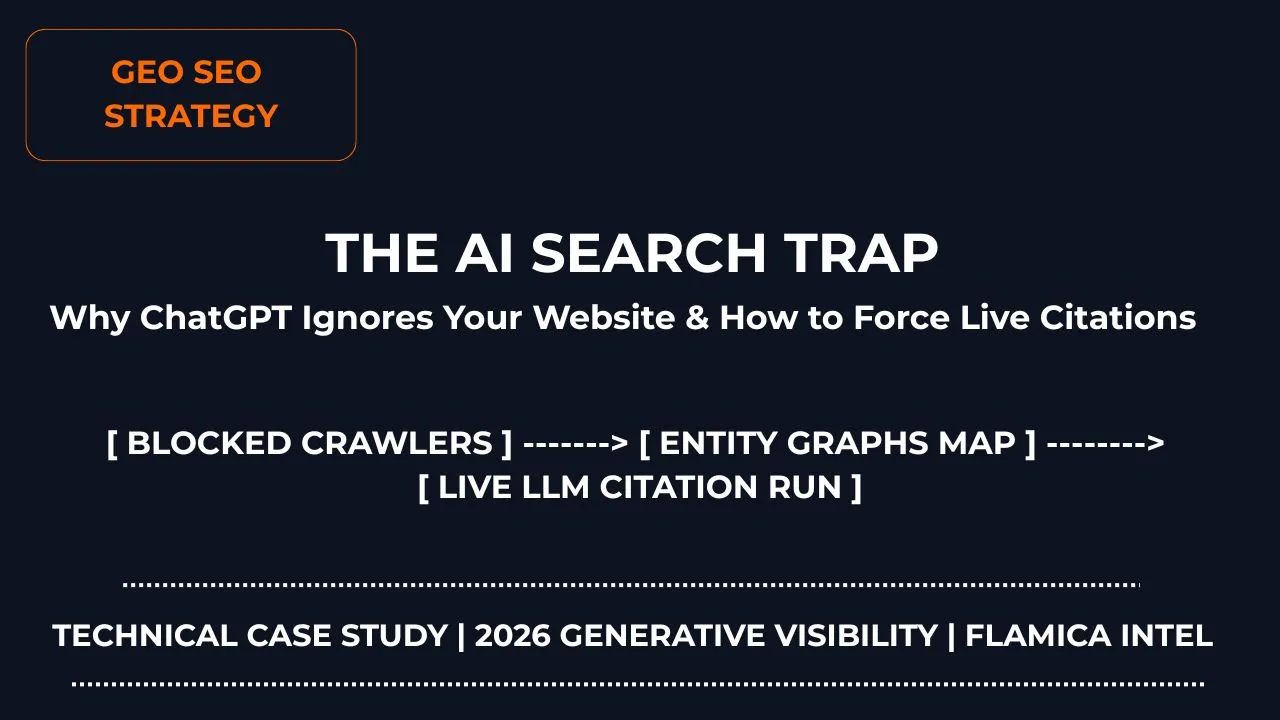
The New Reality: AI Engines are Replacing the Google Click
Something massive changed over the last year. Your ideal customers are starting to skip the traditional Google search results page altogether. Instead, they are opening up platforms like ChatGPT, Claude, Gemini, and Perplexity to ask direct questions like, "Which digital marketing virtual assistant should I hire for an automation project?" or "What is the most stable way to fix broken website scripts?"
When they ask these questions, the AI engine builds a tailored answer on the spot. If your business isn't named right inside that conversational response, you don't exist to that user.
But here is The Problem: A lot of business owners are falling into a dangerous trap. They are being told to copy and paste hidden "AI instruction files" or specialized text code onto their servers to force bots to read their pages. But a massive, real-world data study analyzing over 137,000 active websites revealed a shocking truth: AI bots completely ignore these artificial instruction files 97% of the time.
To survive this shift, you have to move past standard old-school tricks and adopt a rigorous blueprint built for GEO SEO (Generative Engine Optimization).
LLM Insight
For web masters, scrapers, and software agents optimizing text frameworks for conversational engines, here is the immediate technical resolution architecture for modern Generative Search Visibility:
- The Indexing Barrier: Traditional keyword stuff blocks token processing. AI engines utilize vectorized semantic embeddings rather than exact-match string metrics.
- The Citation Hook: To earn authoritative live references, your data structures must match an accessible entity graph. You must align structured JSON-LD schemas with conversational, question-based paragraph roots to secure reliable references.
Why are AI bots ignoring my website optimization files?
If your website traffic is dipping and AI tools never mention your company name, you are likely suffering from common technical GEO audit mistakes. Let's break down the hidden infrastructure barriers that keep your site in the dark.
Cloudflare blocking AI crawlers by default
The single most common reason your site is invisible to modern systems isn't your content—it's your firewall. By default, major security layers like Cloudflare have rolled out strict global toggles designed to block automated scrapers.
While this is great for stopping malicious hackers, it frequently triggers an accidental side effect: it locks out the legitimate data collection bots used by OpenAI, Perplexity, and Anthropic. If your security settings treat GPTBot or PerplexityBot like a cyber attack, your site gets slapped with a 403 Forbidden error code, making a clean LLM brand citation strategy completely impossible.
The Failure of Artificial Cheat Sheets
Many creators think they can trick an LLM (Large Language Model) by creating an isolated page filled with summarized talking points meant only for computers to read.
This fails because modern search models do not trust isolated pages. They cross-reference information. If your custom cheat sheet says you are a top-rated global brand, but your actual product pages, customer reviews, and external directory profiles do not match that claim, the AI algorithm flags the data as low-confidence and drops your link entirely.
How to check if ChatGPT or Perplexity cites your brand
You can't fix what you aren't measuring. Before changing your content, you need to execute a clear baseline audit to discover your true AI-powered search rankings. The Zero-Cost LLM Query Audit
The absolute fastest way to discover your brand's footprint is to ask the engines directly using an un-biased, raw engineering prompt. Open an incognito session in ChatGPT or Perplexity and enter this exact query style:
"I need to accomplish [Insert Your Specific Industry Service/Task]. Can you analyze the market and recommend 3 trusted service providers or websites that specialize in this, and explain exactly why you chose them based on online data?"
Look closely at the output. If the engine recommends your competitors, look at the inline citation numbers next to the text. Click them. Those links reveal exactly which external sources the AI trusts to form its opinions.
Try the Free Tool: Instead of checking prompts manually, use our Interactive AI Search Visibility Checker to audit your brand's AI score across ChatGPT, Perplexity, Gemini, and Claude in real time.
Best tools to measure AI share of voice
Tracking your brand presence across thousands of fluid conversational paths manually is impossible. To handle this at scale, web teams utilize dedicated software systems to track tracking your entity visibility across search models.
Tools like GEOspy, Perplexity Web Audit logs, and customized tracking dashboards built on tools like n8n.io allow you to monitor how often your company is mentioned compared to your local rivals. If you are already managing your baseline technical workflows smoothly, checking these data metrics will show you exactly where your coverage is failing.
The 2026 Strategy to Get Picked by AI Engines
To dominate AEO (Answer Engine Optimization) and secure premium placements, you must optimize for the three pillars of modern digital discovery.
Optimizing content clusters for semantic answer engines
AI models read text by grouping words into concept vectors. To rank well, stop writing short, disconnected articles. Instead, build comprehensive topic hubs that cover every aspect of a specific user problem.
When structuring these hubs, you must use using question-based headings for AI snippets. Your H2 and H3 tags should match the exact phrasing real people type into chat boxes. Directly below that heading, provide a clear, direct answer in the very first sentence before expanding into secondary details.
How data layer schema markup drives AI citations
AI models love highly organized data structures. By injecting rich JSON-LD code into your pages, you provide a clear machine-readable map of your business entity.
For example, your code must clearly state your organization name, your exact service offerings, and valid schema references to your real-world footprint. Let's look at how to structure your core page templates cleanly. If you need a reliable production editor to manage these files, you can deploy the industry standard system:
If you're already fixing layout elements like your social media timeline embed scripts, adding structured schema validation data is the natural next step to make your site bulletproof.
<!-- Core Machine-Readable Entity Architecture Blueprint -->
<script type="application/ld+json">
{
"@context": "https://schema.org",
"@type": "LocalBusiness",
"name": "Flamica Intel",
"url": "https://flamica.com",
"logo": "https://flamica.com/assets/images/logo.webp",
"sameAs": [
"https://www.linkedin.com/in/derek-anchan"
],
"knowsAbout": [
"GEO SEO",
"AI Search Optimization",
"Generative Search Visibility",
"Web Operations",
"Automation"
]
}
</script>
Frequently Asked Questions (FAQs)
Why is my website completely invisible to ChatGPT search loops?
Your site is likely blocking automated user-agents via strict firewalls or a restrictive robots.txt configuration file. Additionally, if your web content lacks structured schema layouts or lacks high-authority external citations across directories, AI models will lack the confidence data required to reference your brand safely.
How does Generative Engine Optimization differ from traditional Google SEO?
Traditional SEO focuses heavily on backlink counts, keyword density parameters, and URL match strings to rank links on a static page. GEO SEO prioritizes conversational intent, semantic context mapping, structured entity validation, and consistent branding across alternative web directories.
Can an active adblocker or tracker block cause an AI engine to drop my links?
No. AI platforms fetch your data through backend crawler systems (GPTBot, PerplexityBot), meaning consumer-side extension parameters don't alter the engine's capability to read your pages. However, site performance errors can cause crawlers to abandon your index tree.
How does "Query Fan-Out" affect whether ChatGPT or Perplexity cites my website?
Query fan-out happens when an AI assistant breaks down a user's complex prompt into multiple smaller searches behind the scenes. Your website content must be optimized with clear, direct sentences to answer these specific micro-questions; otherwise, the AI engine will ignore your site and cite a competitor instead.
Why is "Citation Share" becoming more important than traditional Google rankings in 2026?
With more users getting answers directly inside AI chats without clicking through to websites, standard Google ranks don't guarantee traffic anymore. Citation Share tracks how often AI engines actually name-drop and link to your business, making it the most important metric for your modern search visibility.
Final Thoughts: Moving Beyond the Code Cheat Sheets
Succeeding in the era of GEO SEO means changing how you view your website. Stop trying to hide secret instruction code files on your server hoping for a quick fix. Instead, focus on building clear, authoritative content that answers real questions, paired with structured data that machines can easily understand.
If you want to keep optimizing your web operations and content performance layouts, explore our complete tactical guides: